Organic Compounds Containing Oxygen: Chemistry | JEE Main
Given below are two statements:
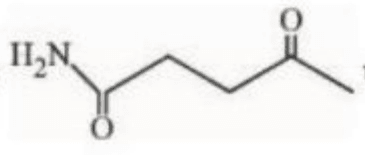
Statement I : under Clemmensen reduction conditions will give
Statement II : under Wolff-Kishner reduction condition will give
In the light of the above statements, choose the correct answer from the options given below:
Your answer stays private
What feels right?
Hint 1 of 3
What are the chemical conditions of the Clemmensen reduction, and how do they affect an ester group?
No score. Commit to your first instinct. We’ll show what your mind noticed and what it missed.
Step-by-step solutionView
Correct answer
Statement I is true because Clemmensen reduction selectively reduces carbonyl groups without affecting esters, whereas Statement II is false because the strongly basic conditions of the Wolff-Kishner reduction hydrolyze or eliminate base-sensitive functional groups (such as halides or esters) rather than leaving them intact.
Option analysis
Why each option works or fails
A · Statement I is false but Statement II is true
Believing that Clemmensen reduction cannot reduce ketones in the presence of esters, while assuming Wolff-Kishner reagents are completely inert toward base-sensitive substituents. Recognize that Clemmensen reduction (Zn(Hg)/conc. HCl) does not reduce ester carbonyls, whereas Wolff-Kishner reduction uses strongly basic conditions (NH2NH2/KOH, heat) that trigger side reactions with base-sensitive groups.
B · Statement I is true but Statement II is false
None. This option correctly evaluates the functional group compatibility under strongly acidic versus strongly basic reducing conditions. None.
C · Both Statement I and Statement II are true
Assuming that Clemmensen and Wolff-Kishner reductions always reduce carbonyls into methylene groups universally regardless of other functional groups present in the molecule. Always inspect the compatibility of co-existing functional groups with strongly acidic (Clemmensen) or strongly basic/nucleophilic (Wolff-Kishner) reaction conditions.
D · Both Statement I and Statement II are false
Assuming that neither Clemmensen nor Wolff-Kishner reduction can operate selectively when any second functional group is present. Clemmensen conditions selectively convert ketones/aldehydes to -CH2- without reducing esters, so Statement I is completely valid.
Reviewed route
Solution
StepWorking
01concept
Clemmensen reduction uses Zn(Hg)/HCl under strongly acidic conditions. It reduces carbonyl groups (>C=O) to methylene groups (−CH2−). It is compatible with acid-stable functional groups like ethers. Therefore, the methoxy group (−OCH3) remains unaffected.
Wolff-Kishner reduction uses NH2NH2/KOH,Δ under strongly basic conditions. It also reduces carbonyl groups to methylene groups. However, halogens like −Cl react under strong base. Benzylic and alkyl chlorides undergo nucleophilic substitution or elimination with strong base or hydrazine. Thus, Wolff-Kishner reduction fails to selectively reduce the carbonyl without affecting the halogen.
02option_verdict
Statement I is true because Clemmensen reduction (acidic) cleanly reduces the ketone to a −CH2− group without altering the −OCH3 substituent. Statement II is false because the chloro substituent (−Cl) reacts under the strongly basic conditions of Wolff-Kishner (undergoing elimination/substitution), so the chloro-substituted hydrocarbon is not cleanly obtained.
03option_verdict
Incorrectly assumes that the ether group gets cleaved under Clemmensen reduction or that the chloro group survives Wolff-Kishner reduction.
04option_verdict
Assumes both carbonyl reductions occur cleanly at >C=O while ignoring the reactivity of the halogen (−Cl) toward the strong base/nucleophile KOH/NH2NH2 in Wolff-Kishner reduction.
05option_verdict
Assumes both statements are false by mistakenly believing Clemmensen reduction cannot reduce aromatic ketones bearing methoxy substituents.
✓discriminator
Check functional group sensitivity: Clemmensen is acidic (safe for −OCH3), while Wolff-Kishner is strongly basic (incompatible with alkyl/benzylic halides like −Cl due to elimination/substitution). Hence Statement I is true and Statement II is false.
Hints that build this answer step by step
What are the chemical conditions of the Clemmensen reduction, and how do they affect an ester group?
Clemmensen reduction uses Zn(Hg) in concentrated HCl; it reduces aldehydes and ketones to alkanes but does not reduce ester groups.
What are the reaction conditions of the Wolff-Kishner reduction, and how do they interact with base-sensitive functional groups?
Wolff-Kishner uses hydrazine (NH2NH2) and strong base (KOH/glycol) under high heat, which causes side reactions (like elimination, hydrolysis, or substitution) with base-sensitive substituents.
Combining the findings from Statements I and II, which overall conclusion is correct?
Wolff-Kishner uses hot concentrated KOH and hydrazine. Strongly basic conditions cause dehydrohalogenation (elimination) or nucleophilic substitution of halogens.