Electrostatics: JEE Main Physics Question with Solution
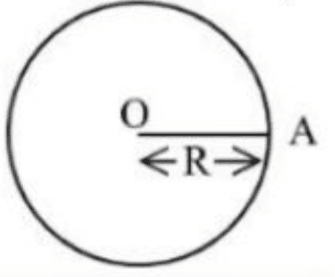
For a uniformly charged thin spherical shell, the electric potential (V) radially away from the center (O) of shell can be graphically represented as
Your answer stays private
What feels right?
Hint 1 of 3
What is the electric field E(r) inside a uniformly charged thin spherical shell (r<R)?
No score. Commit to your first instinct. We’ll show what your mind noticed and what it missed.
Step-by-step solutionView
Correct answer
Inside a uniformly charged spherical shell, the electric potential is constant and equal to its value at the surface, while outside the shell, it decreases inversely with distance as V(r)∝1/r.
Option analysis
Why each option works or fails
A ·
None. This option correctly shows V remaining constant from r=0 to r=R and decaying as 1/r for r>R. Inside the shell, the electric field is zero, meaning potential does not change and equals the surface potential V0=RkQ. Outside the shell (r≥R), V(r)=rkQ.
B ·
Confusing the potential profile of a thin conducting shell with that of a uniformly charged solid non-conducting sphere. A thin spherical shell has no charge within its interior (r<R), so the field is identically zero and potential is flat, not linearly increasing.
C ·
Confusing electric potential with electric field, assuming V=0 inside because E=0. Since E=−drdV, E=0 implies drdV=0, which means V is constant (equal to the surface potential), not zero.
D ·
Assuming that potential decreases monotonically starting from a maximum at the center r=0. No work is done moving a test charge inside the hollow interior because E=0, so the potential cannot drop between r=0 and r=R.
Reviewed route
Solution
StepWorking
✓quick_kill
For a thin spherical shell of radius R, the electric potential is constant inside and on the surface (V=RkQ for r≤R) and decreases inversely with distance outside (V=rkQ∝r1 for r>R), which corresponds to the horizontal line from 0 to R followed by a hyperbolic drop.
Hints that build this answer step by step
What is the electric field E(r) inside a uniformly charged thin spherical shell (r<R)?
E(r)=0
Given that E=−drdV=0 for r≤R, what is the functional form of V(r) inside the shell?
V(r)=constant=RkQ
How does V(r) behave outside the shell (r≥R), and which graph correctly combines both regions?
V(r)=rkQ, so the graph is flat from r=0 to R, then decays as 1/r.