Principles Related to Practical Chemistry: Chemistry | JEE Main
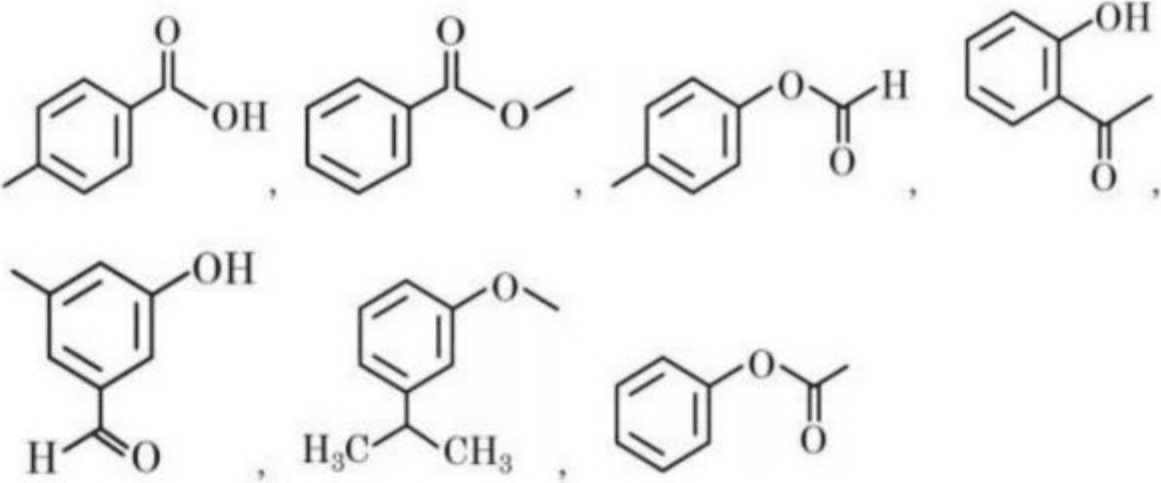
Number of compounds from the following which will not dissolve in cold NaHCO3 and NaOH solutions but will dissolve in hot NaOH solution is
Your answer stays private
What feels right?
Hint 1 of 3
Which characteristic chemical behavior allows an organic compound to be insoluble in cold aqueous base but soluble in hot NaOH?
No score. Commit to your first instinct. We’ll show what your mind noticed and what it missed.
Type the value - units or words beside it are fine.
Step-by-step solutionView
Correct answer
Esters and lactones do not dissolve in cold aqueous sodium bicarbonate or cold sodium hydroxide, but dissolve in hot sodium hydroxide via base-catalyzed ester hydrolysis (saponification).
Option analysis
Why each option works or fails
Reviewed route
Solution
StepWorking
01given
A set of organic compounds: carboxylic acids, phenols, esters, and anilines/neutral species.
02find
Number of compounds that do NOT dissolve in cold NaHCO3 and cold NaOH, but DO dissolve in hot NaOH solution.
03visualise
Carboxylic acids (−COOH) dissolve in cold NaHCO3 and cold NaOH by simple acid-base neutralization. Phenols dissolve in cold NaOH (but not cold NaHCO3). Esters do not dissolve in cold NaHCO3 or cold NaOH due to low acidity, but upon heating with aqueous NaOH, they undergo saponification/base hydrolysis to form water-soluble carboxylate salts.
04strategise
Identify the esters among the given structures, as they are insoluble in cold alkali/bicarbonate but dissolve upon saponification in hot NaOH.
05execute
Counting the ester compounds from the given set yields exactly 3 compounds.
✓verify
Carboxylic acids dissolve in cold base, so they are excluded. Phenols dissolve in cold NaOH, so they are also excluded. Non-hydrolyzable neutral hydrocarbons and simple ethers do not dissolve even in hot NaOH.
Hints that build this answer step by step
Which characteristic chemical behavior allows an organic compound to be insoluble in cold aqueous base but soluble in hot NaOH?
The compound is insoluble initially but undergoes saponification/hydrolysis on heating to form water-soluble carboxylate and alcohol salts.
How do carboxylic acids and phenols behave in cold aqueous sodium hydroxide compared to esters?
Carboxylic acids and most phenols dissolve readily in cold NaOH via acid-base neutralization, whereas esters remain unreactive and insoluble until heated.
Which functional groups specifically meet the criteria of being insoluble in cold NaHCO3 and cold NaOH, yet soluble in hot NaOH?
Why do esters dissolve in hot NaOH but not cold NaOH?
Esters lack sufficiently acidic protons to form salts at room temperature. However, hot NaOH promotes nucleophilic acyl substitution (saponification). This reaction cleaves the ester into a water-soluble sodium carboxylate.